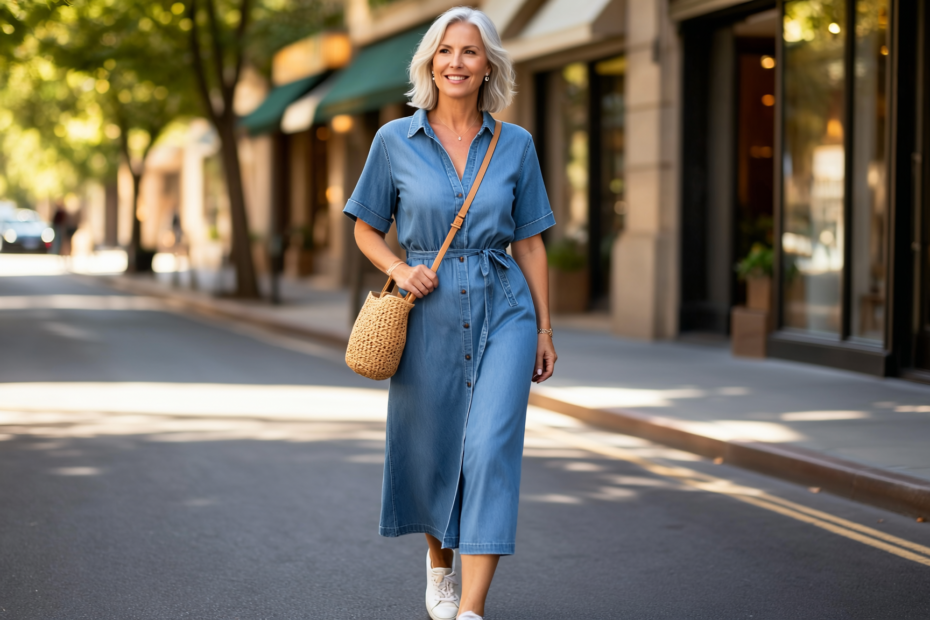
Casual dresses in your 50s and beyond should feel like your favorite friend. Easy to be around, kind to your body, and always appropriate for where you are going. If a dress looks lovely on the hanger but you cannot sit, walk, or breathe comfortably in it, it does not belong in your everyday lineup.
What Makes a Casual Dress Work for Women Over 50
Comfort Comes First, Without Looking Sloppy
You want a dress you can wear from breakfast to late afternoon without feeling squeezed or self conscious. Look for:
- Soft, breathable fabrics that feel good against your skin and move with you, not against you.
- Non clingy silhouettes that skim your shape instead of gripping every curve.
- Coverage where you want it, like a higher neckline, wider shoulder straps, or a bit more length when you sit.
Comfort is not code for “baggy.” The goal is relaxed, not oversized and shapeless.
Flattering Cuts That Respect Your Shape
A well chosen casual dress gives you structure without restriction. Many women over 50 appreciate:
- Defined but gentle waistlines that create shape without tight seams.
- Soft draping over the midsection for a smooth look in the tummy area.
- Necklines that open up the face, such as V necks, split necks, or modest scoop necks.
- Sleeves that feel “just right”, from cap or short sleeves to three quarter length, depending on what you prefer to show.
Think of the cut as your quiet stylist. When it is right, you stand taller and fuss less.
Age Appropriate Without Feeling Old
You do not need to dress “young,” you need to dress like yourself now. Age appropriate casual dresses balance coverage, polish, and personality. That might mean:
- Clean lines and simple shapes instead of fussy details that add bulk.
- Patterns and colors that feel modern, not “too junior” or dated.
- Lengths you can move in confidently, whether that is just above the knee, midi, or maxi.
Why Casual Dresses Belong in Your Everyday Wardrobe
A good casual dress does a lot of quiet work for you. One piece, and you are pulled together. No wrestling with matching tops and bottoms. No waistband digging in after lunch. For everyday errands, relaxed social time, or casual meals out, a dress gives you instant polish with almost zero effort.
They also adapt beautifully to the weather. In warmer months, a breathable casual dress keeps you cooler than many separates. When temperatures drop, you can add leggings or tights, a cardigan or light jacket, and a scarf for extra warmth. The same core dress serves you across seasons, which makes it a smart, low stress staple in your closet.
Types of Casual Dresses Ideal for Women Over 50
Maxi Dresses
Maxi dresses give you length, ease, and coverage, which many women appreciate as bodies change. A softly skimming maxi works well if you prefer to cover legs or varicose veins while still feeling feminine. If you are on the shorter side, look for a maxi with side slits or a defined waist so you do not feel swallowed by fabric.
For everyday, choose simple prints or solids with breathable fabric. You can wear a maxi to run errands, relax at home, or dress it up for a casual dinner with nicer sandals and jewelry.
Shirtdresses
Shirtdresses have a tailored, slightly structured look that feels polished without being formal. The button front, collar, and gentle shaping suit a variety of body types. If you carry weight through the middle, look for a shirtdress with a relaxed cut and a soft belt you can adjust, or skip the belt and let the dress skim.
Shirtdresses work well for casual workplaces, brunch, or daytime gatherings. They pair easily with flats, loafers, or low heels, and layer nicely with cardigans or light jackets.
Sundresses
Sundresses are perfect for warm weather, resort trips, and relaxed weekends. If you prefer more coverage, look for wider straps, higher armholes, and a bodice that fully covers your bra. A-line or gently flared sundresses flatter fuller hips and thighs, while a slightly defined waist can highlight your shape without clinging.
You can keep a sundress casual with simple sandals and a straw bag, or bring it into dressy casual territory with a light wrap and nicer accessories.
Fit and Flare, A Line, and Wrap Dresses
Fit and flare dresses define the waist, then float away over the hips and thighs. This shape creates balance for fuller hips or broader shoulders and gives a feminine outline without tightness.
A line dresses are a bit straighter through the top, then gently widen. They work well if you prefer less waist emphasis or want extra ease through the midsection. This style suits most body types and can go from casual daywear to dressy casual with a change of shoes and jewelry.
Wrap dresses or faux wrap styles are very friendly to curves. The V neckline opens the face, the wrap effect suggests a waist, and the skirt usually has soft movement. If you want a forgiving dress for weight fluctuations, a wrap style often adjusts with you. Choose a length you feel secure in for sitting and moving, especially for social events.
Fabric and Fit Considerations for Comfort and Style
Choosing Fabrics That Feel Good All Day
Your fabric choice matters just as much as the cut. At 50 and beyond, most women want clothes that breathe, move, and feel kind to their skin.
- Cotton feels soft, breathable, and dependable for daily wear. Look for cotton with a bit of stretch if you like extra give through the waist or shoulders.
- Linen is ideal for heat and humidity. It breathes beautifully and keeps you cooler. If you dislike strong wrinkling, choose linen blends that soften the look of creases.
- Rayon and similar fibers offer lovely drape and movement. These work well for dresses that glide over the body instead of clinging.
- Blends that mix natural fibers with a small amount of stretch can give you comfort, polish, and shape retention in one piece.
For year round wear, look for medium weight fabrics that do not feel flimsy in cooler months, and that still breathe in warmer indoor settings.
Fit That Respects a Changing Body
Your body may not match how it looked in your 30s, and that is normal. The goal is not to squeeze back into an old size. The goal is to dress the body you have now, with kindness and clarity.
- Give the midsection breathing room. Look for gentle shaping, pleats, or soft gathers instead of tight, fixed waist seams.
- Check the shoulder and arm fit. Sleeves should let you lift and reach without pulling across the upper arm or back.
- Allow for the bust. If you have a fuller bust, seek V necks, surplice, or wrap effects, and consider styles that offer darts or seams for better shaping.
- Mind the length when you sit. Try the “sit test.” The dress should still cover what you want covered when you bend, cross your legs, or get in and out of a car.
Comfort Without Losing Style
You do not have to choose between comfort or style. You can have both when you focus on three things, fabric, fit, and proportion.
- Pick fabrics that feel soft and breathable yet look polished, not sleepy.
- Choose your correct size, or even size up, then define shape with a light belt, seaming, or structured neckline instead of tightness.
- Balance coverage and ease, for example, a relaxed dress with a neater sleeve and a clean neckline, so you look intentional, not hidden.
When fabric and fit are right, you stop tugging at your clothes and start enjoying your day. That is the real goal of every casual dress in your closet.
Seasonal and Occasion Based Styling Tips
Easy Styling For Summer And Warm Weather
In summer, let your casual dresses do the cooling for you. Choose lighter colors, breathable fabrics, and silhouettes that skim without clinging. Sleeveless or short sleeve styles work well if you feel comfortable with your arms. If you prefer coverage, look for flutter sleeves or airy three quarter sleeves instead of heavy layers.
Keep accessories light. Think:
- Simple jewelry such as a delicate necklace or small hoops that will not feel sticky in the heat.
- Wide brim hats for sun protection and a polished finish.
- Comfortable sandals with cushioning that you can walk in for more than a few minutes.
Keep this in mind. If the fabric sticks when you sit in a warm car, it is not your best summer dress.
Spring And Cooler Weather Layering
Spring can be tricky, cool in the morning and warm by afternoon. This is when layering over your dresses becomes very useful. A soft cardigan gives you comfort and coverage, while a neat knit jacket or unstructured blazer adds just enough structure for lunch dates or casual meetings.
Use this simple layering framework:
- Light layer such as a cardigan or denim style jacket for casual errands and relaxed days.
- Sharper layer such as a blazer with clean lines for worklike settings or dressy casual gatherings.
- Scarf or wrap in a flattering color to warm the neck and brighten the face.
On cooler days, add opaque tights or leggings and closed toe flats or ankle boots. This lets your summer dresses work harder for you across seasons.
Resort And Vacation Ready Styling
For resort or vacation wear, think easy dresses that handle movement, sitting, and walking. Choose flowy maxis, sundresses, or simple A line styles that roll into a suitcase without drama. Solid colors in mid tones, soft tropical inspired prints, or gentle geometrics can feel relaxed without looking costume like.
Finish your resort outfits with:
- Flat or low wedge sandals that are secure on your feet.
- A woven or structured bag that works for both sightseeing and dinner.
- Jewelry in lighter metals or natural textures to echo the relaxed setting.
Colors, Prints, Accessories, And Footwear That Work Hard
For casual dresses, a mix of timeless solids and soft prints serves most women over 50. Use this guide:
- Solids in your best neutrals for maximum versatility. These are easy to dress up or down with jewelry and layers.
- Floral or botanical prints with gentle contrast if you enjoy a feminine look without feeling busy.
- Stripes or subtle patterns for a clean, modern feel that still hides minor wrinkles and bumps.
Keep accessories and shoes in harmony with how relaxed the occasion is. For day, reach for minimal jewelry, flat sandals, loafers, or clean sneakers. For dressy casual, switch to statement earrings or a bold bracelet, a refined belt, and low heels or elegant flats. Small changes shift the same casual dress from errands to evening without sacrificing comfort.
Shopping Smart: Where And How To Find The Best Casual Dresses
Online Versus In Store Shopping
Both options can work well, especially when you know what you want from each.
When shopping online, start by checking the size chart and reading fit notes. Look for details about length, fabric content, and whether the dress runs small or generous. Use filters for sleeve length, dress length, and fabric, so you do not wade through styles that will never work for you. Order from places with clear return policies so you can try pieces at home with your own shoes and layers.
When shopping in store, treat the fitting room as your friend. Sit, walk, and reach overhead in each dress. Notice how the fabric feels against your skin and whether anything pulls or gaps. Take photos of yourself in the mirror if that helps you see the dress more objectively.
Size Inclusivity And Brands That Respect Mature Bodies
Look for brands that offer a wide size range and different fits, such as petite, regular, and plus. That usually signals that they design with real bodies in mind instead of one narrow ideal. Check if the same dress appears in more than one length, for example, above the knee, midi, or maxi. This lets you choose coverage that matches your comfort level.
Pay attention to product descriptions that mention relaxed waists, bust darts, or curvy fits. These details often mean fewer alterations and a better overall look.
How To Spot Quality And Care For Longevity
Quality does not always mean the highest price. You can use a simple checklist when you shop.
- Seams should lie flat, with no puckering or loose threads.
- Fabric should feel substantial enough that it does not turn sheer in bright light unless that is the design.
- Prints and stripes should line up at seams whenever possible, which signals more careful construction.
- Closures such as zippers and buttons should move smoothly and feel secure.
Before you buy, read the care label. Decide if you are willing to follow those instructions. Hand wash or dry clean only pieces may not suit a busy, casual lifestyle. If you want dresses that last, wash in cool water, avoid high heat in the dryer, and store them on proper hangers to protect the shoulders.
Budget Friendly, Not Cheap Looking
You can build a strong casual dress wardrobe on a realistic budget.
- Prioritize your workhorse pieces, such as a neutral midi dress or a simple maxi in a favorite color, then spend a bit more on those.
- Save on “fun” prints or trend based details that you might wear less often.
- Watch for seasonal sales and end of season clearances if you are willing to buy for next year.
- Use a try on checklist so you only keep dresses that feel good, fit well, and pair with at least [insert number] items you already own.
The goal is a small group of dresses you reach for often, not a crowded closet of pieces you tolerate. When you shop with that in mind, every new dress has a clear place in your everyday life.
Versatility And Dressy Casual Options
Taking A Casual Dress From Day To Dressy Casual
A good casual dress can work harder for you when you know how to shift it into dressy casual territory. The key is to keep the comfortable base, then change the details around it.
Use this simple upgrade formula:
- Switch your shoes. Trade clean sneakers or basic sandals for low heels, dressier flats, or a sleek ankle boot. Even a small heel or a more refined shape signals a step up from everyday.
- Refine your bag. Move from a big tote or canvas bag to a structured handbag or a small crossbody with simple hardware.
- Add one polished layer. A soft blazer, neat knit jacket, or tailored cardigan instantly makes a casual dress feel ready for social events or casual workplaces.
One or two intentional changes are usually enough. You do not need a complete outfit overhaul.
Using Jewelry To Lift A Look
Jewelry has a big impact on how dressy your casual dress appears.
- For daytime casual, keep it soft and minimal. Think small hoops, a simple bracelet, or a delicate pendant.
- For dressy casual, choose one focal point. That might be statement earrings, a bolder necklace, or a stack of bracelets in a coordinating tone.
If your dress has a print, let the jewelry support it rather than compete. For solids, jewelry becomes the personality, so you can lean into a stronger piece without feeling overdone.
Belts And Layering Pieces That Create Shape
Belts and layers can take a relaxed dress and give it quiet structure that suits dinners, gatherings, or casual work settings.
- Belts work well over looser dresses. Try a soft belt at the natural waist, a slim belt just under the bust, or a self tie that came with the dress. The goal is to suggest shape, not to cinch tightly.
- Cardigans in a finer knit can look dressy when they follow the line of the body and hit at a flattering point, such as mid hip or just above the knee for longer dresses.
- Blazers or structured jackets give instant polish. Choose one that you can move in easily, with sleeves that do not pull when you reach.
For casual workplaces, a simple solid dress with a blazer, belt, and neat flats can feel professional yet relaxed enough for your lifestyle.
Keeping Comfort While You Dress Things Up
You never have to trade comfort for a dressier look. You can protect your body and your energy with a few smart choices.
- Choose low or block heels instead of very high, narrow ones so you can stand and walk without strain.
- Pick lightweight statement jewelry that does not tug on your ears or feel heavy around your neck.
- Favor stretch lined or soft fabrics in jackets and belts that move with you as you sit, stand, and reach.
The dress should still feel like “you” when you dress it up. If you feel like you are wearing a costume, simplify. One elevated piece at a time is enough to turn an everyday casual dress into a confident, dressy casual outfit that suits where you are in life right now.
Maintaining Style Confidence And Embracing Personal Fashion
Style confidence at 50 and beyond is less about chasing trends and more about trusting your taste. Your life experience already gave you a strong sense of what feels right. Fashion should support that, not argue with it.
Let Your Style Evolve With Your Life
You are not meant to dress the way you did at [insert earlier life stage]. Your days look different now, so your closet should too. Give yourself permission to:
- Release old rules, such as “I cannot wear that color” or “women my age do not wear dresses like that.”
- Update slowly, one casual dress at a time, instead of trying to reinvent your entire wardrobe in a weekend.
- Notice how you feel in each dress, not just how you look. Ease, confidence, and freedom are your real fit tests.
If a dress makes you stand taller and forget to fuss with it, that is your style voice speaking clearly.
Playing With Color, Prints, And Silhouettes
You can experiment without feeling like you are taking wild risks. Use simple frameworks so the process feels calm, not chaotic.
- Color: Choose [insert number] core neutrals you love, then add [insert number] accent colors that brighten your face. Test new shades in scarves or jewelry first, then move to a dress once you feel comfortable.
- Prints: Decide your “print personality.” Choose from options such as soft florals, low contrast geometrics, or subtle stripes. Aim for prints that sit in the background and let you be the focus.
- Silhouettes: Rotate through [insert number] go to shapes, for example, A line, fit and flare, or relaxed shift. Use a simple question in the mirror, “Does this skim my body or fight it.” Keep the skimmers.
Small, steady experiments help you stay current without feeling like you are trying to look younger.
Building Confidence One Casual Dress At A Time
Confidence grows through repetition. The more often you wear dresses that feel like you, the easier it becomes to ignore outside noise about what women over 50 “should” wear.
- Create a go to outfit formula, for example, casual dress, comfortable shoes, one favorite piece of jewelry, and a light layer. Use this on busy days so you know you look pulled together without thinking about it.
- Keep a “feel good” section in your closet. Only dresses that fit, flatter, and match your life go there. Get dressed from that area first.
- Use a simple mirror checklist: Can I move freely. Do I like the way my face looks with this color and neckline. Would I be comfortable running into someone I know in this. If you get two yes answers out of three, the dress earns its place.
You get to define what stylish looks like for you now. Casual dresses should support your lifestyle, reflect your personality, and let you walk out the door with quiet confidence, no apology and no need to pretend you are any age other than the one you are now.